Black Friday 25% off all handcrafted jewellery25% off everythingShop now
Shopping Cart
0

Your shopping bag is empty

Go to the shop
Craft story · Kilim & Walnut

Before it was an earring, it was a line.

It begins on graph paper, with a pencil and a pattern older than any of us. This is how one piece of handcrafted Kilim & Walnut jewellery is made, followed from the first mark to your hands.

  1. 01The lineEvery kilim pattern is counted out on a grid first. One square, one block of colour.
  2. 02The weaveRow by row, from the bottom up, the way a loom has always worked.
  3. 03The walnutA frame of walnut, cut and sanded by hand, to hold the weave.
  4. 04YoursA small piece of woven history, light enough for every day.
Chapter I · The line

The pencil goes down before the yarn does.
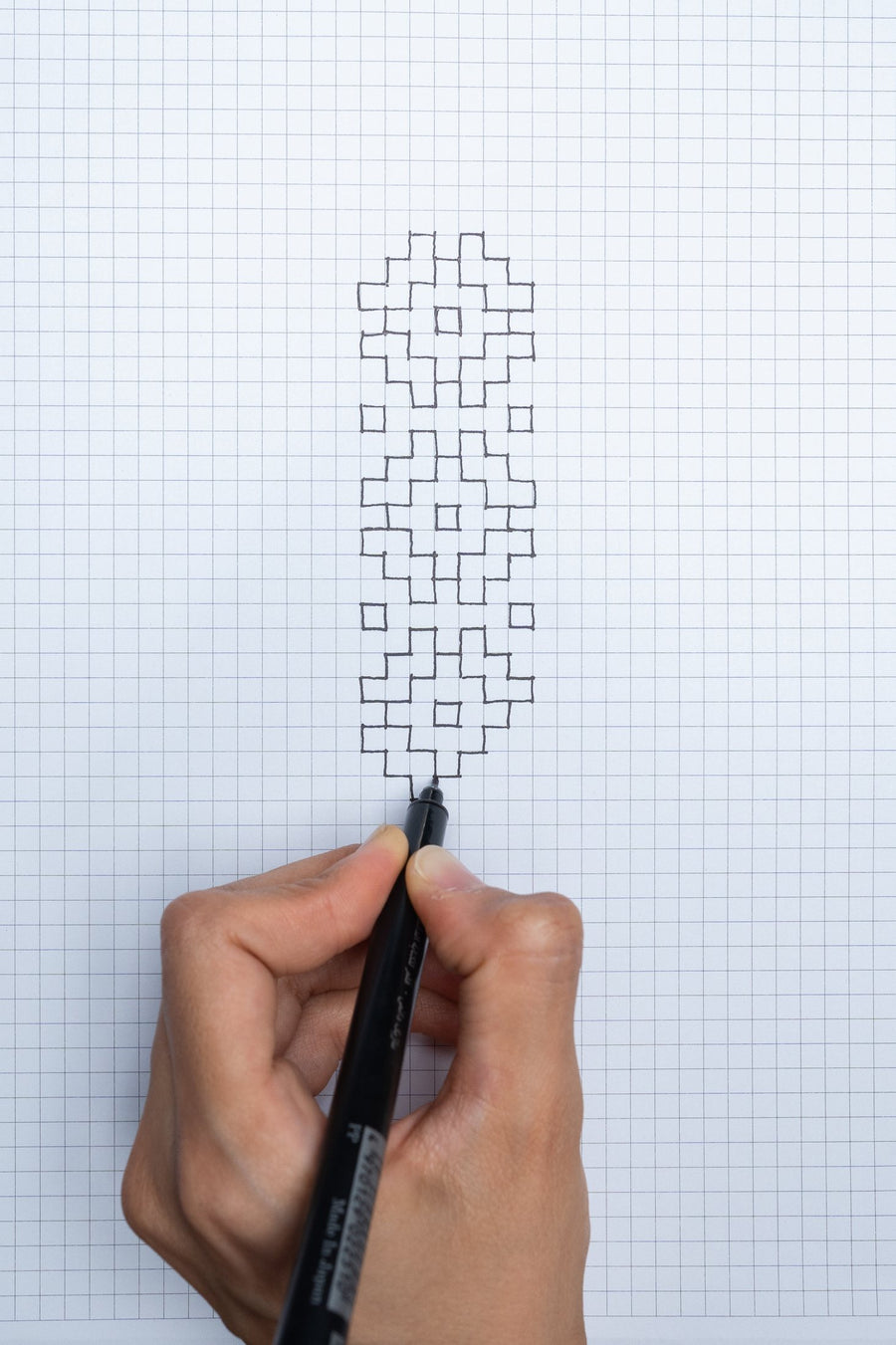
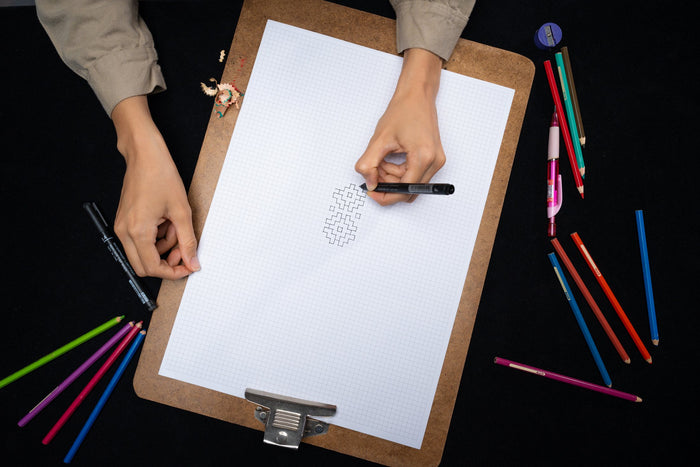
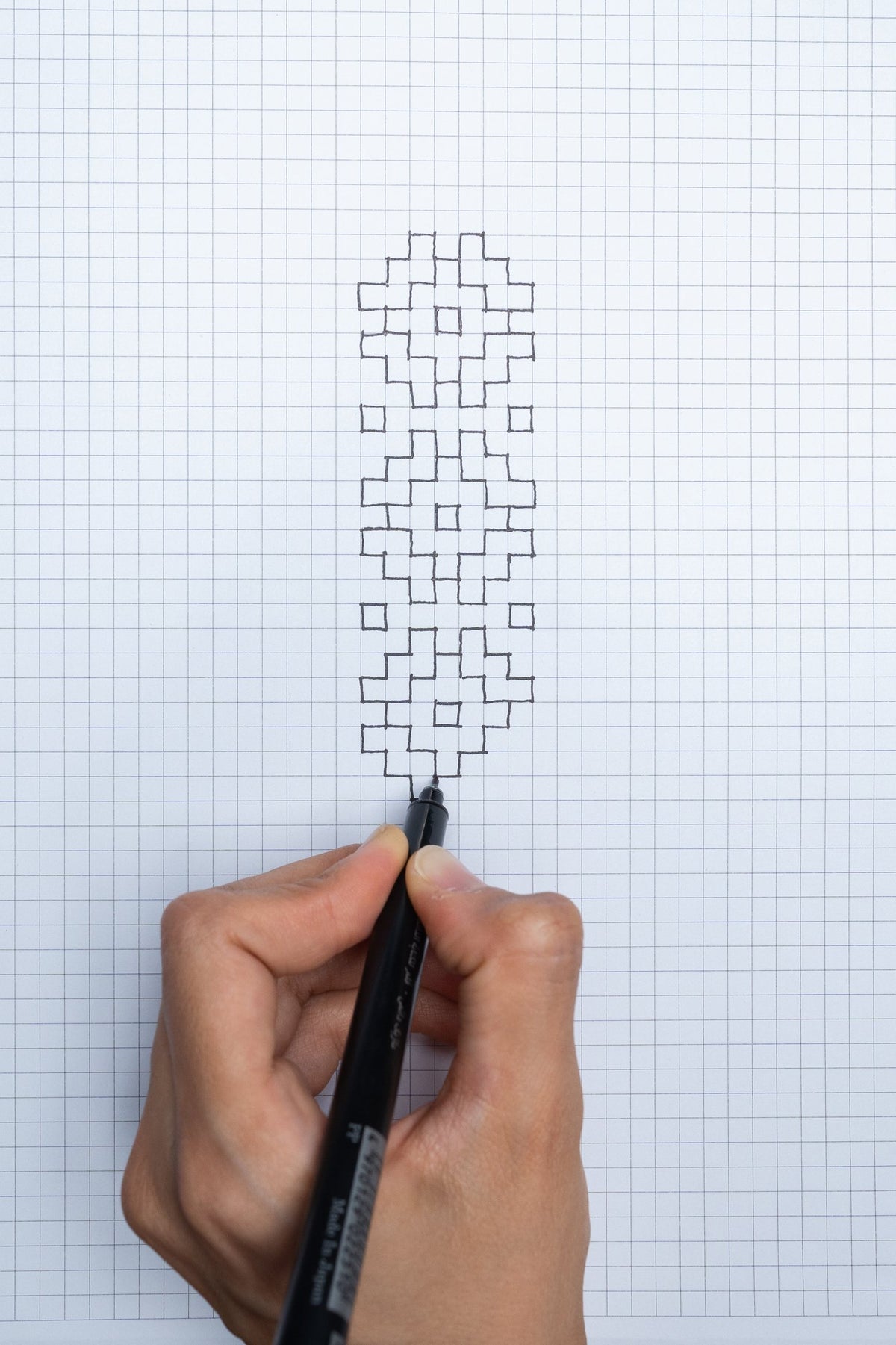
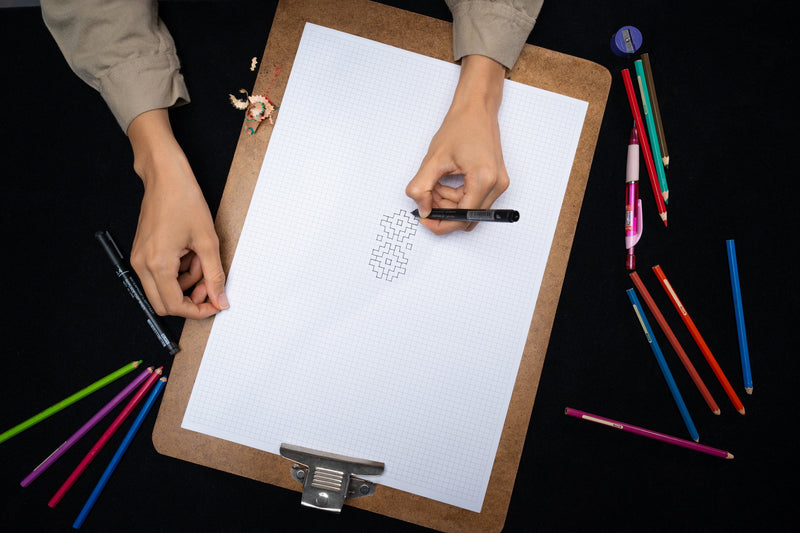
A hand drawing a kilim pattern on graph paperColoured pencils and a kilim pattern sketch on squared paper

On a sheet of graph paper, a pattern is counted out one square at a time: a step up, a step across, a step up again. Kilim has always lived on a grid like this, because the loom thinks in squares too. Each square on the paper will become a small block of colour in the weave.

The shape taking form is a stack of stepped diamonds, a motif weavers have repeated for generations and handed on, hand to hand. Ours is drawn small. Small enough to sit beside a face.
Chapter II · The warp

First, the loom is dressed.

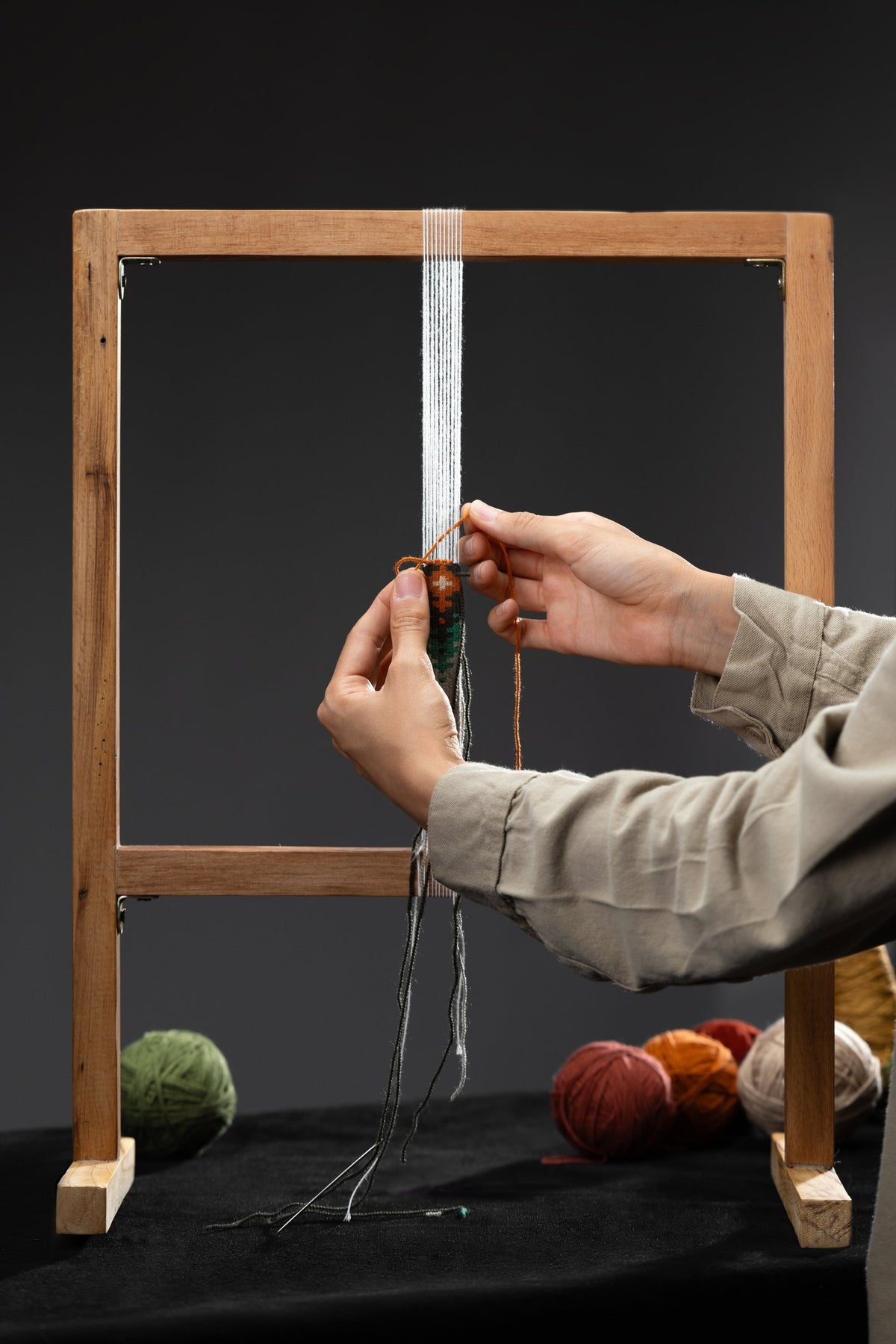
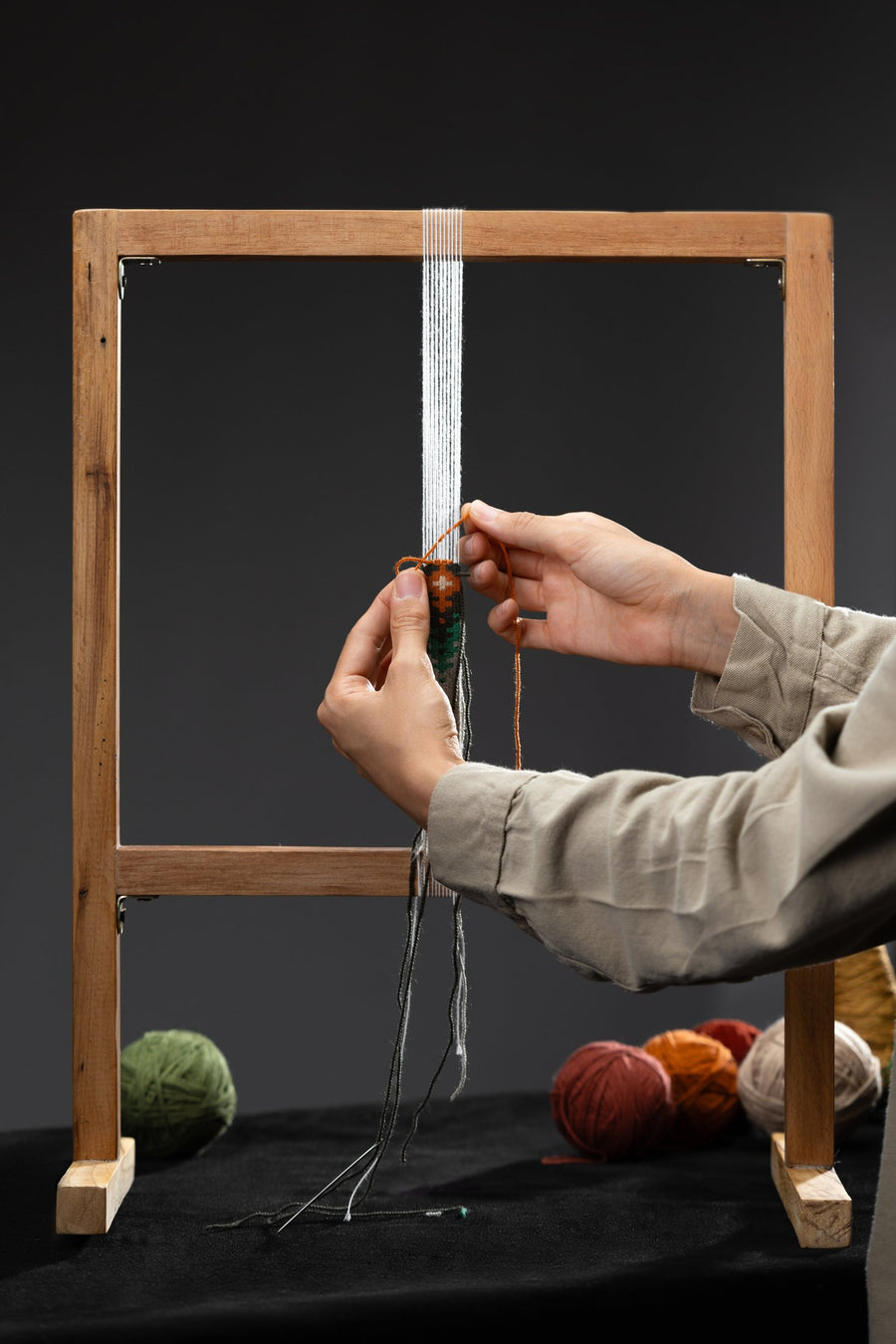
White warp threads strung tight on a small wooden loomFingers passing coloured wool between the warp threads

Pale threads are stretched tight from top to bottom of a wooden frame. This is the warp, the skeleton every row will hang on. Pull it too loose and the weave will sag; too tight and it will pucker. The tension is felt, not measured.

On the table the colours wait in soft balls: a deep red, an indigo close to night, a green like new mint, a gold that catches the lamp. Nothing has been woven yet, and already the piece is half decided.

Chapter III · The weave

Over, under, and press it down.

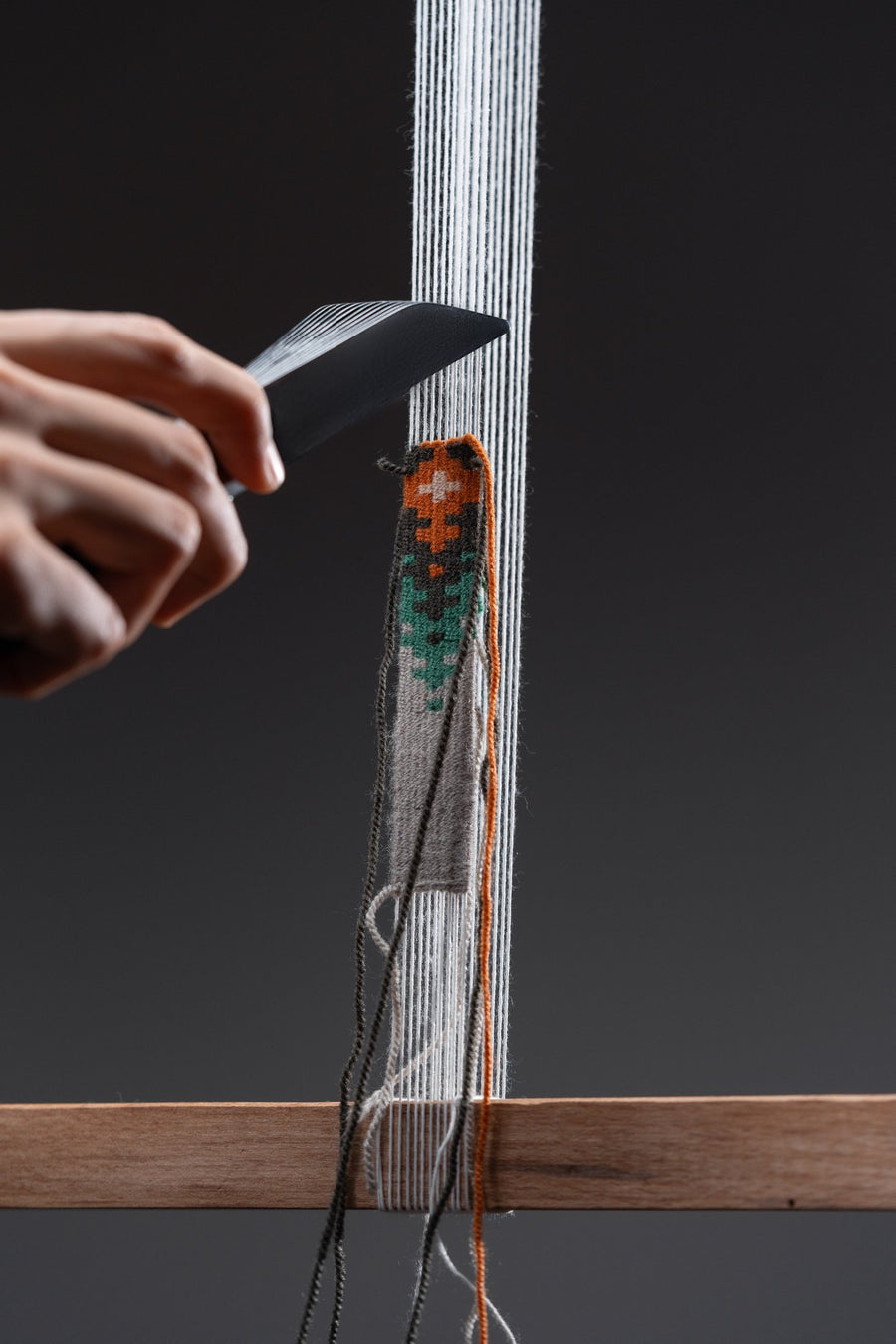
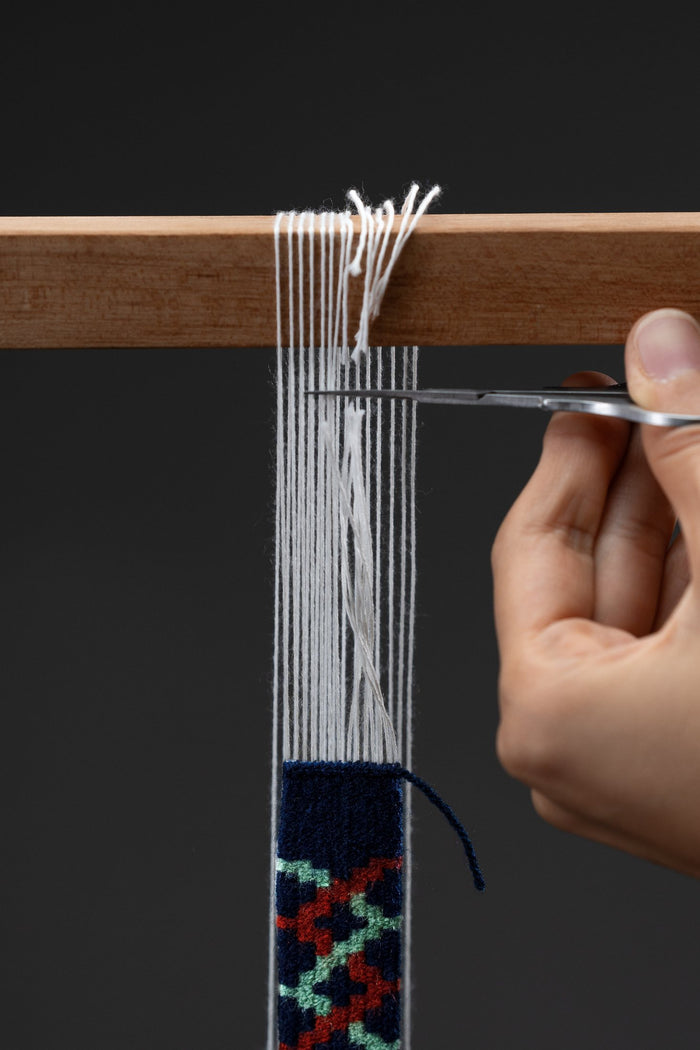
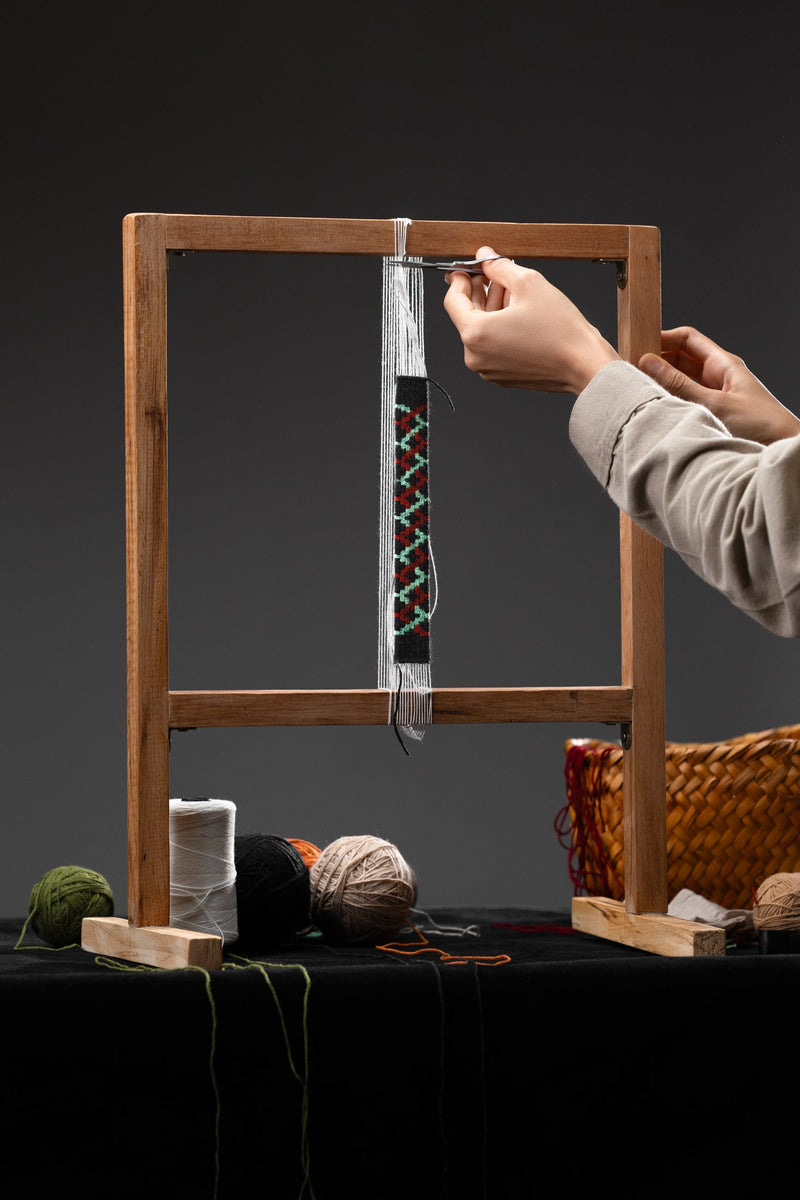
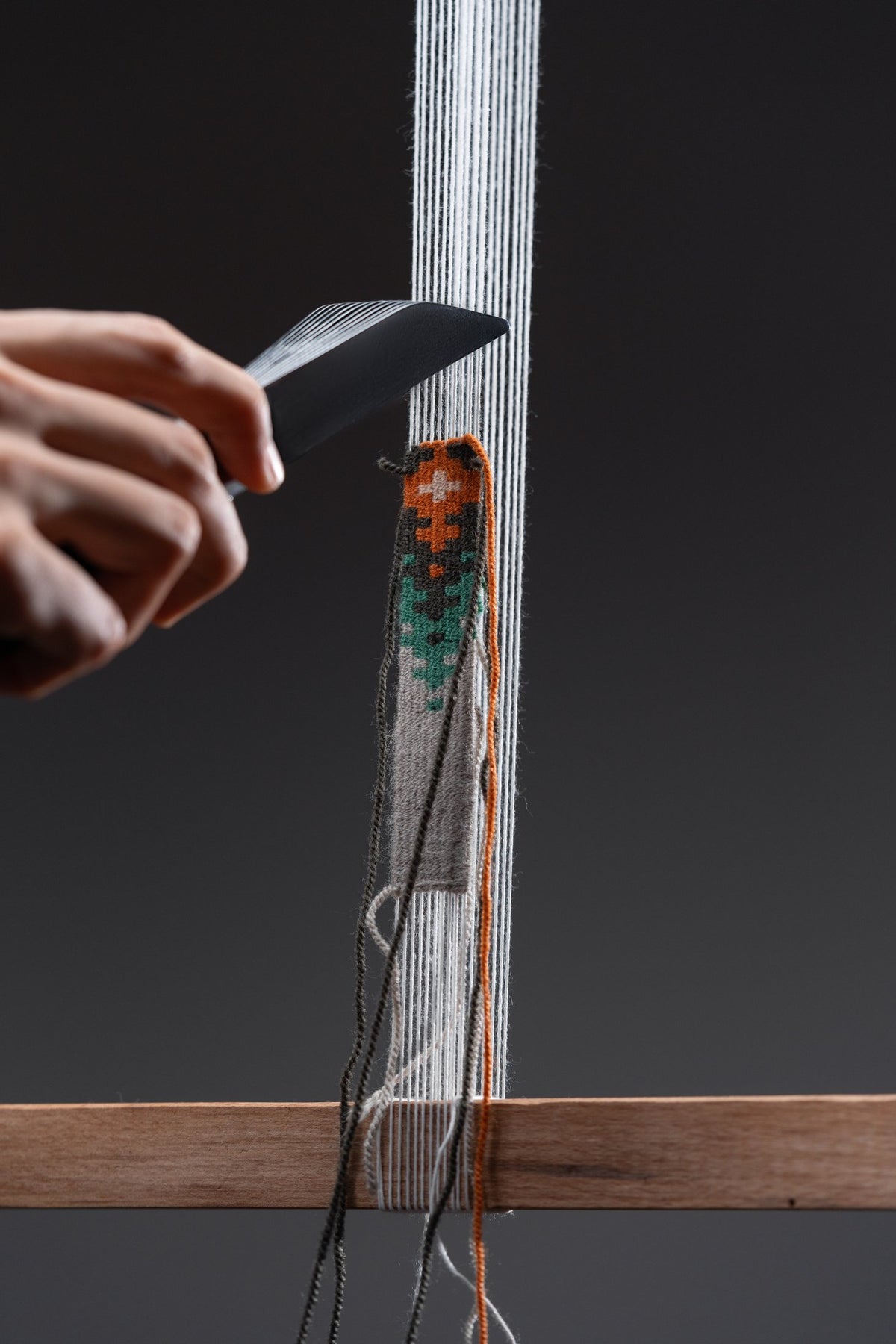
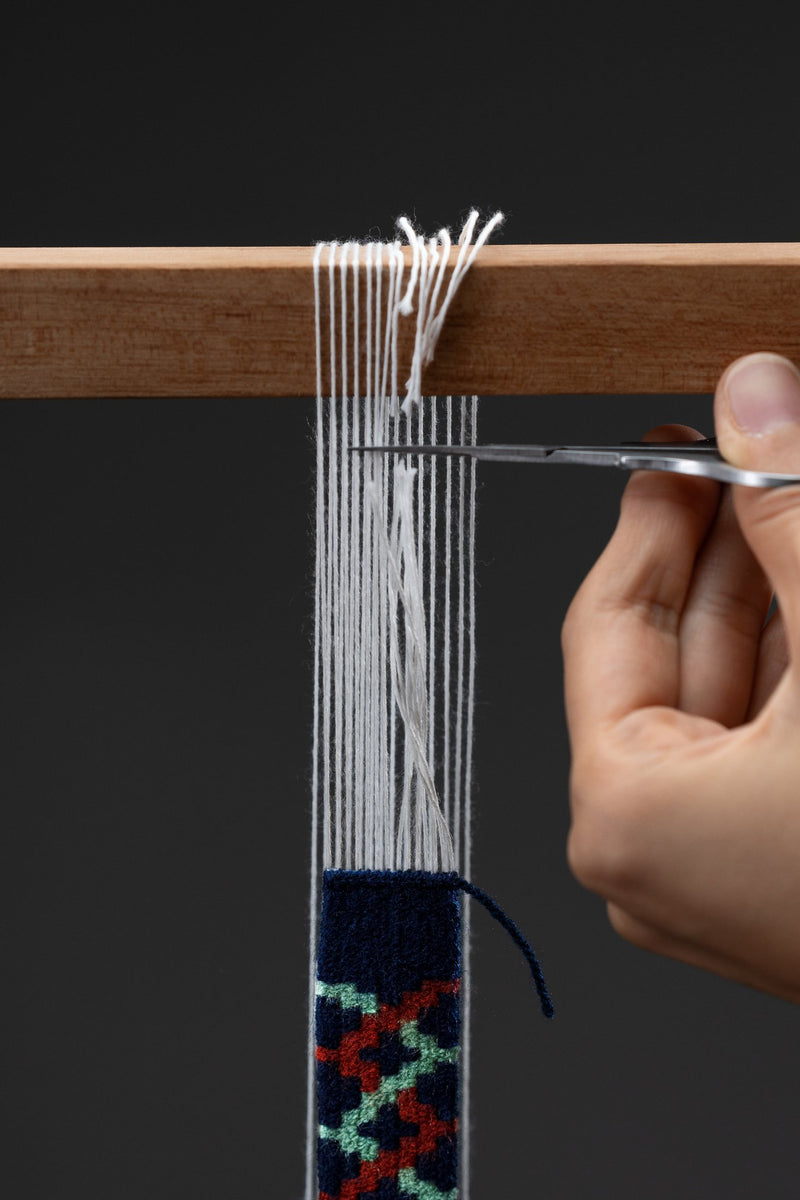
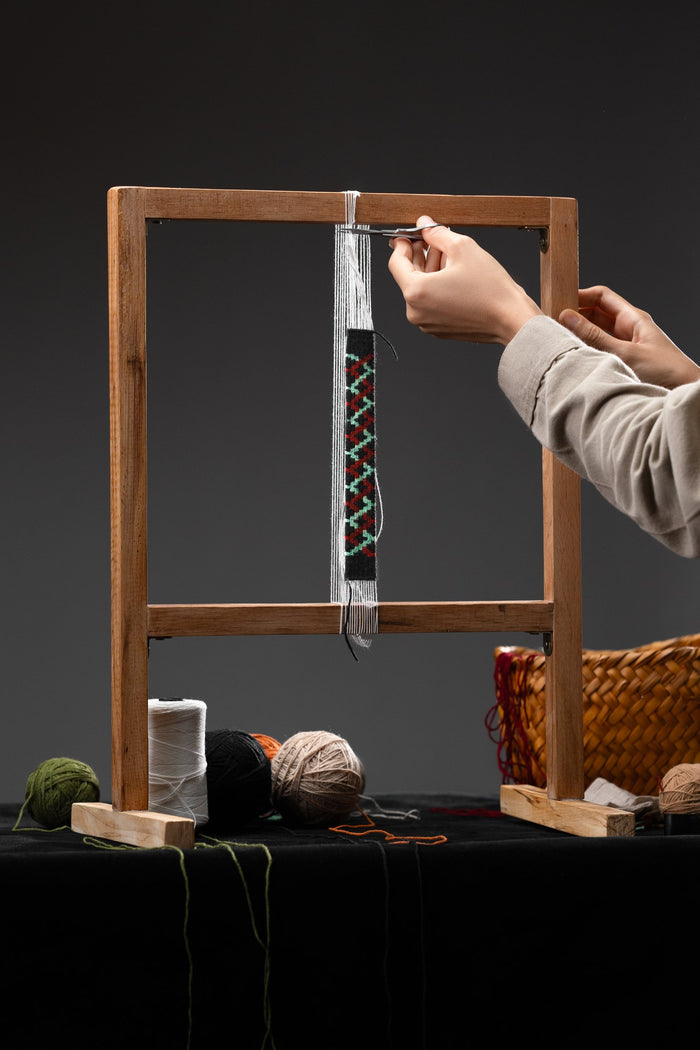
A hand pressing the weft down with a comb on a narrow kilim strip on the loomScissors cutting the finished kilim weave free from the loom

Kilim is a flatweave. There is no knotted pile, only colour passed over and under the warp, then pressed down firmly with a comb so each row sits tight against the one below. Where two colours meet, the yarn turns back on itself, and the pattern from the paper slowly rises out of the threads.

It is slow. Nobody has found a way to hurry it, and we have stopped asking. Only when the last row is in are the warp threads snipped, and the little weave comes off the loom, free for the first time.

Chapter IV · The walnut

Across the bench, a second craft.

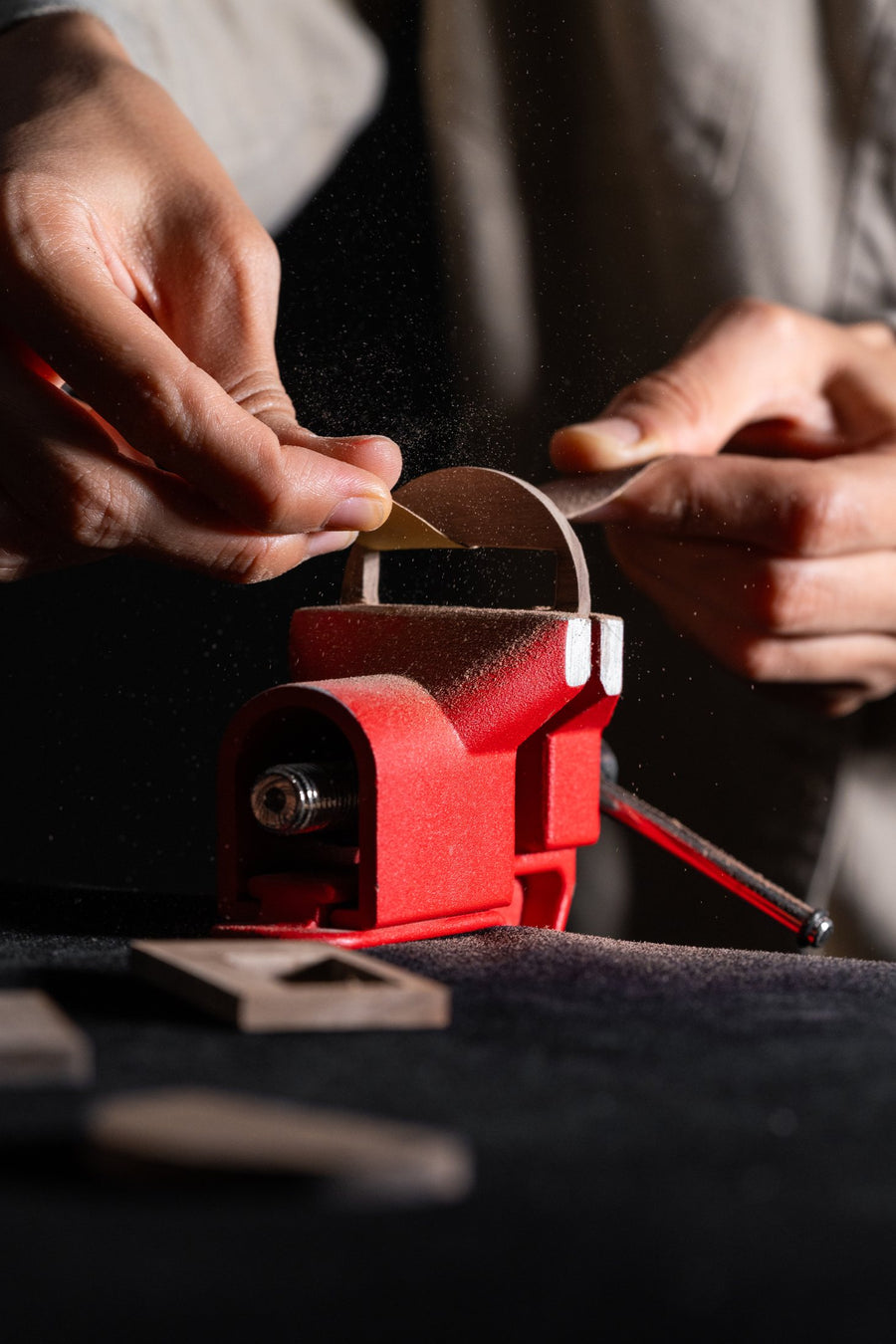
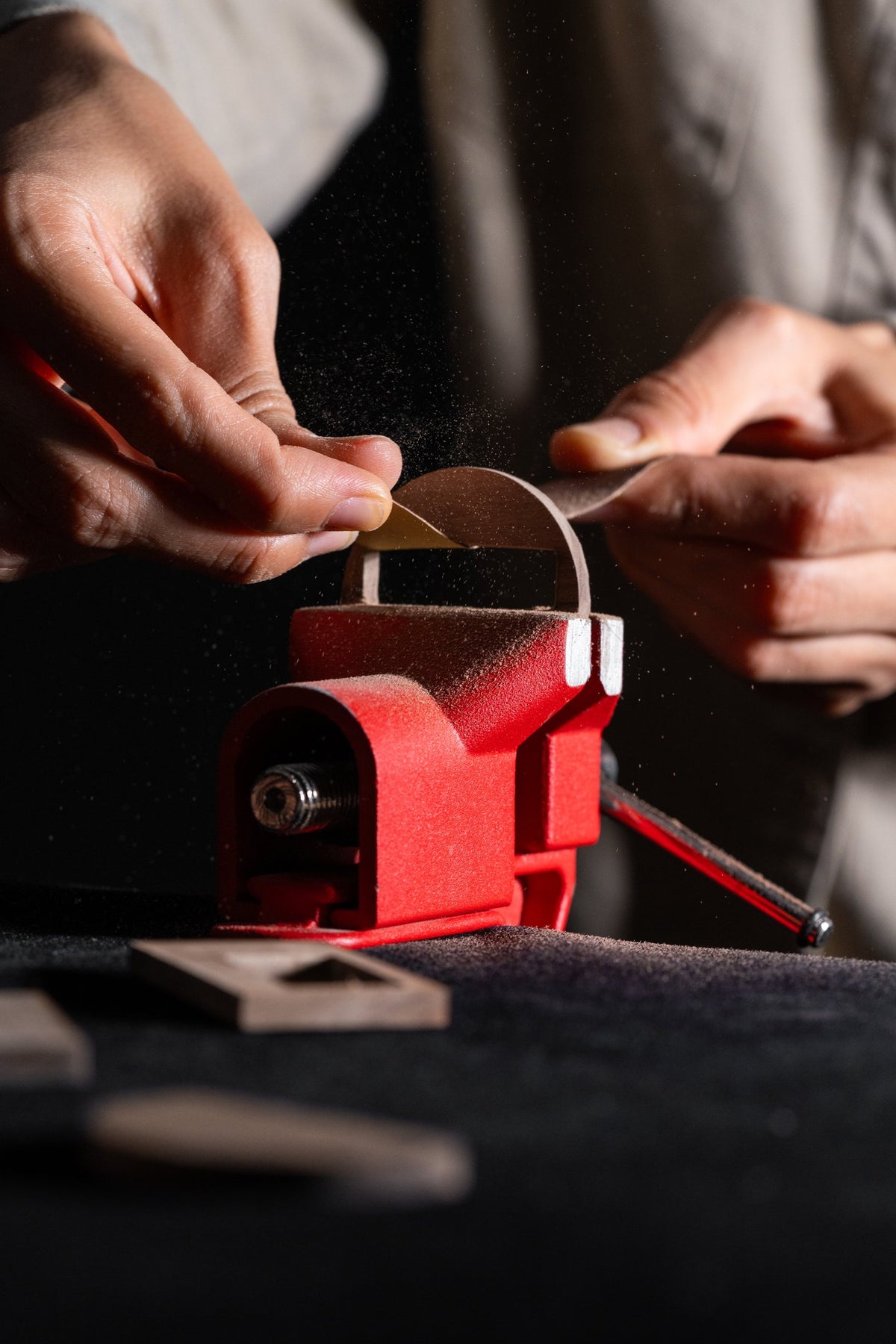
Walnut wood shaped into frames for kilim jewelleryA walnut earring frame being cut from a block of walnut wood

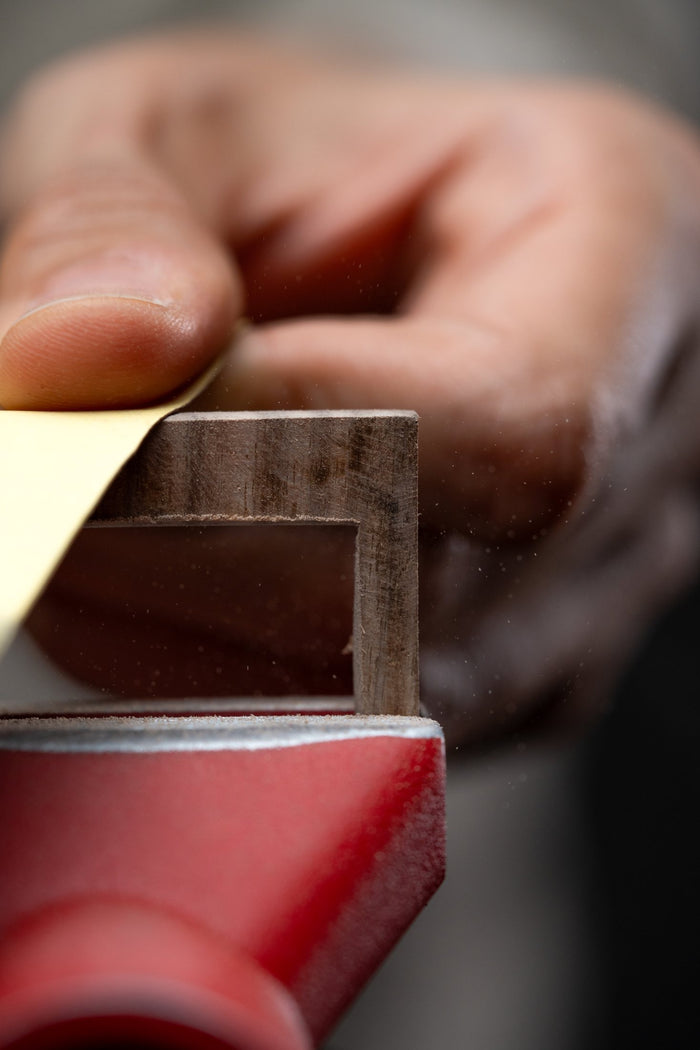
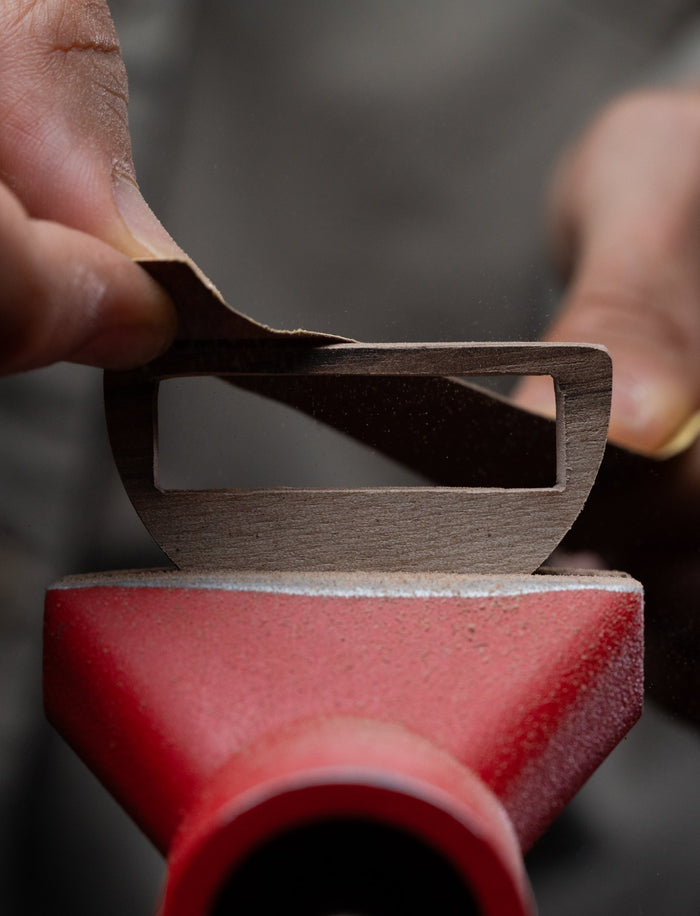
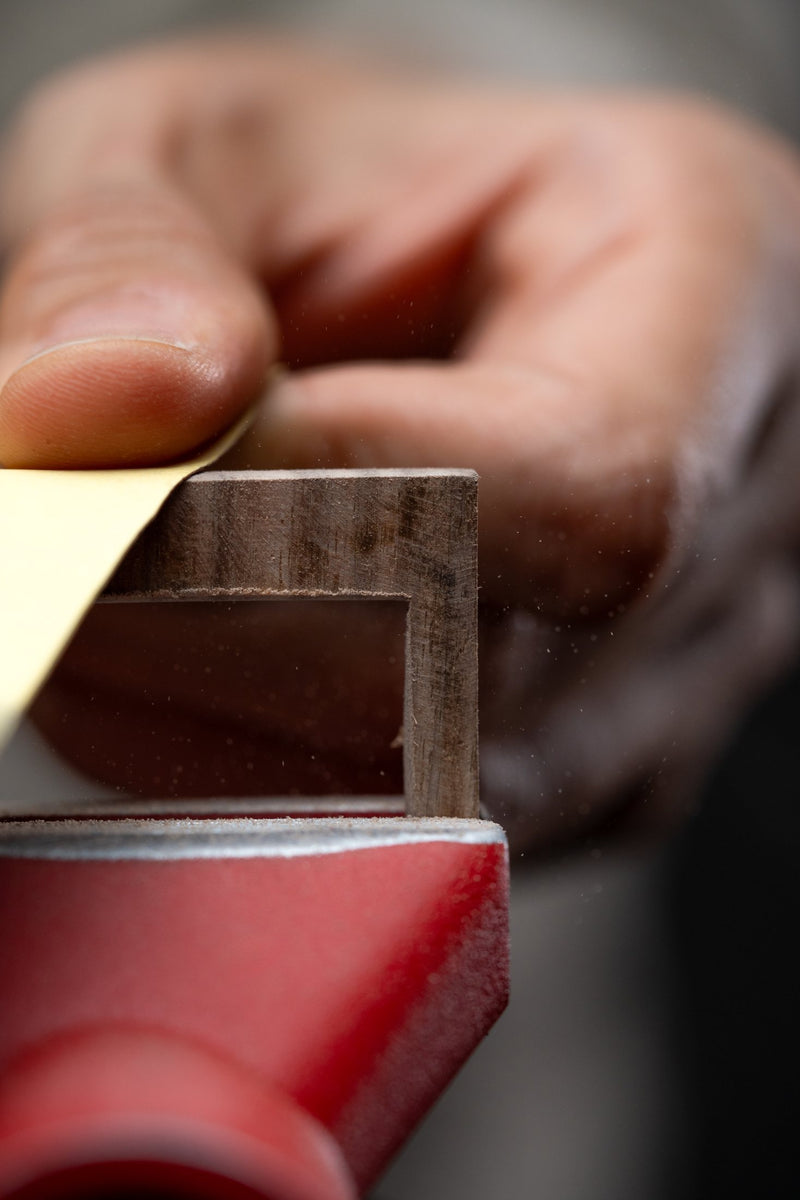
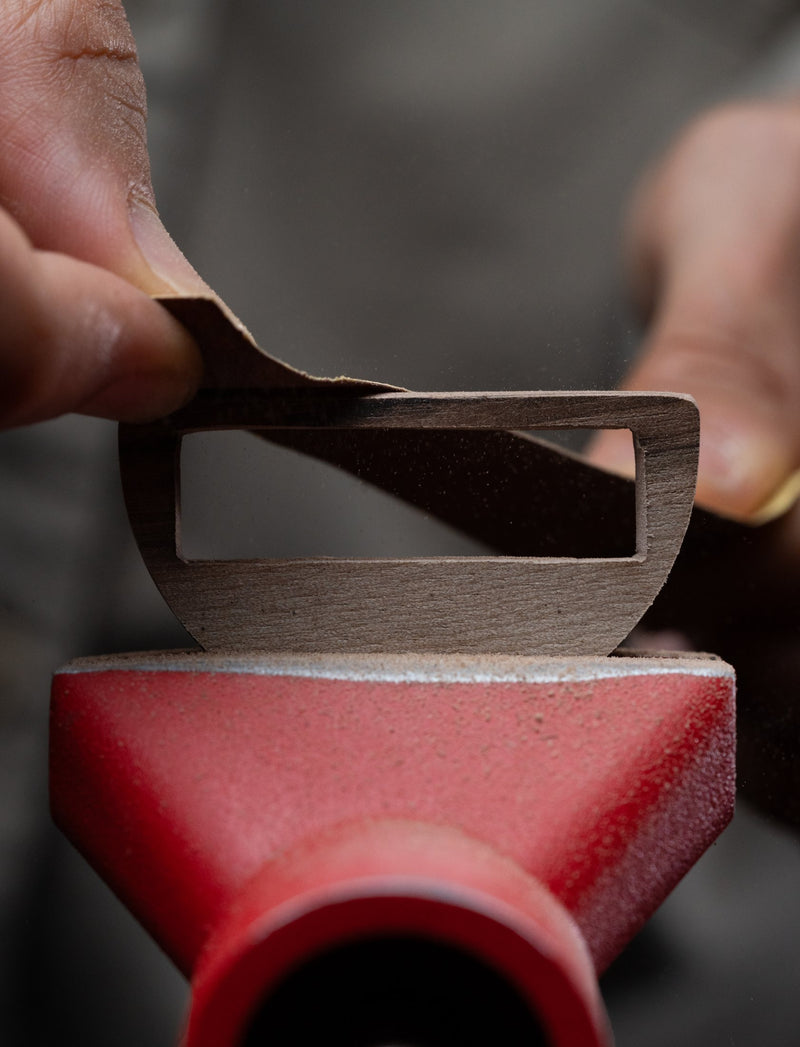
A small piece of walnut is held in a vice and cut to shape. Then comes the sanding, by hand, until the edges soften and the grain starts to glow. It smells faintly sweet, the way good wood does.

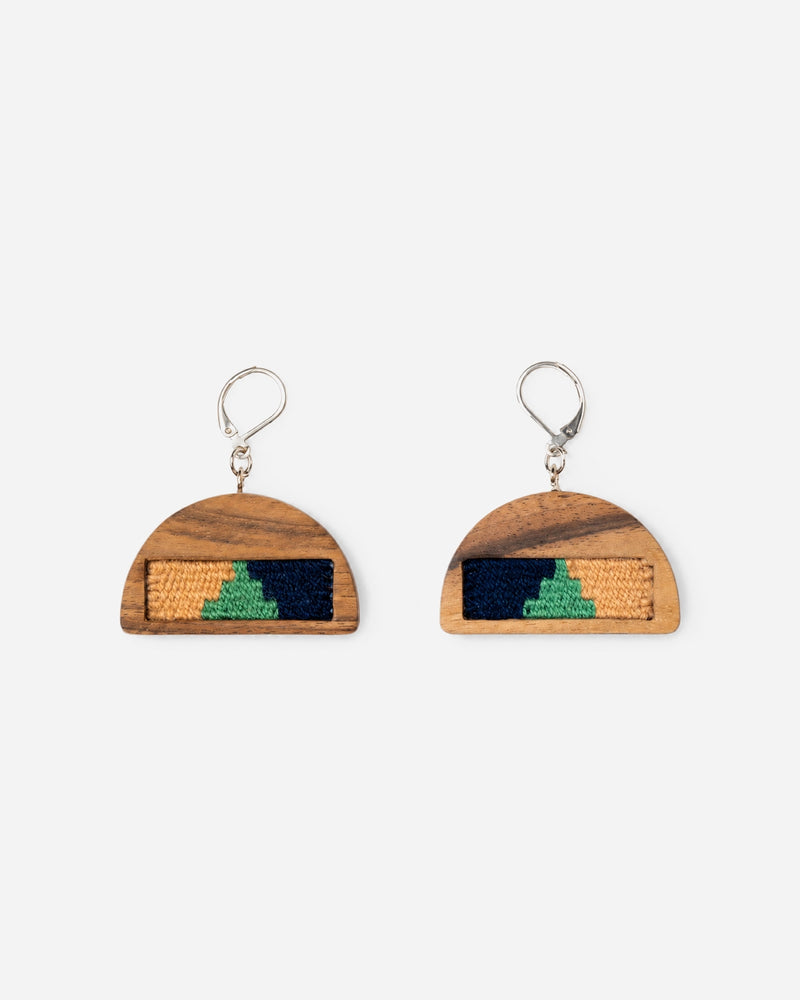
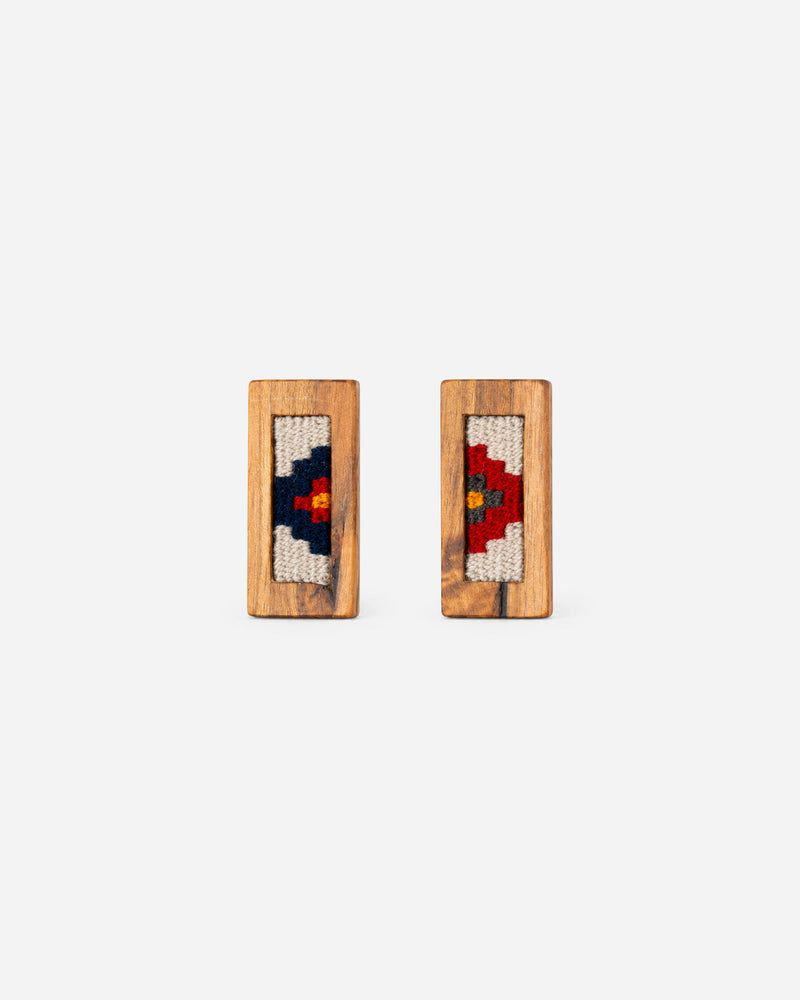
The frame is what lets a textile become jewellery. It gives the weave a border, a little weight, and a way to hang.

Chapter V · The meeting

Two crafts, one object.

A woven kilim piece being set into its walnut frameWalnut earring frames being sanded smooth by hand

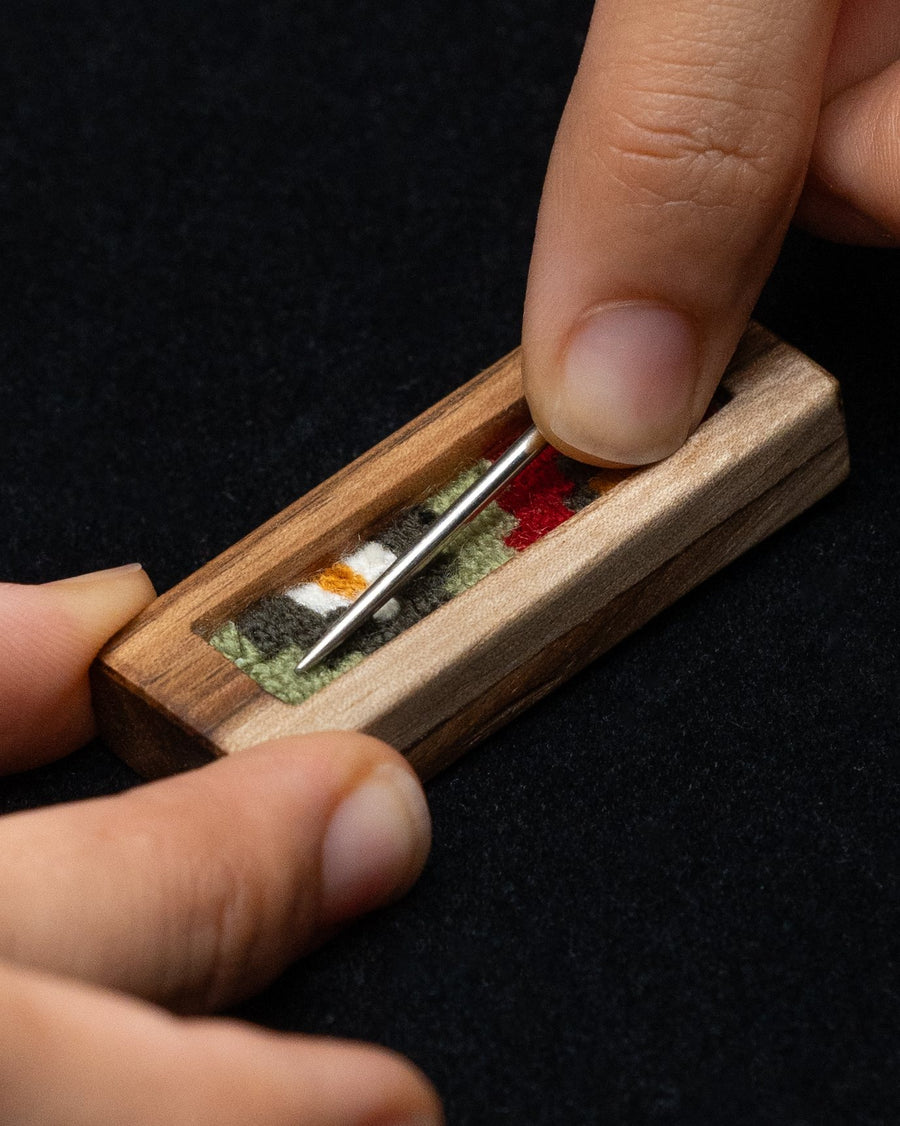
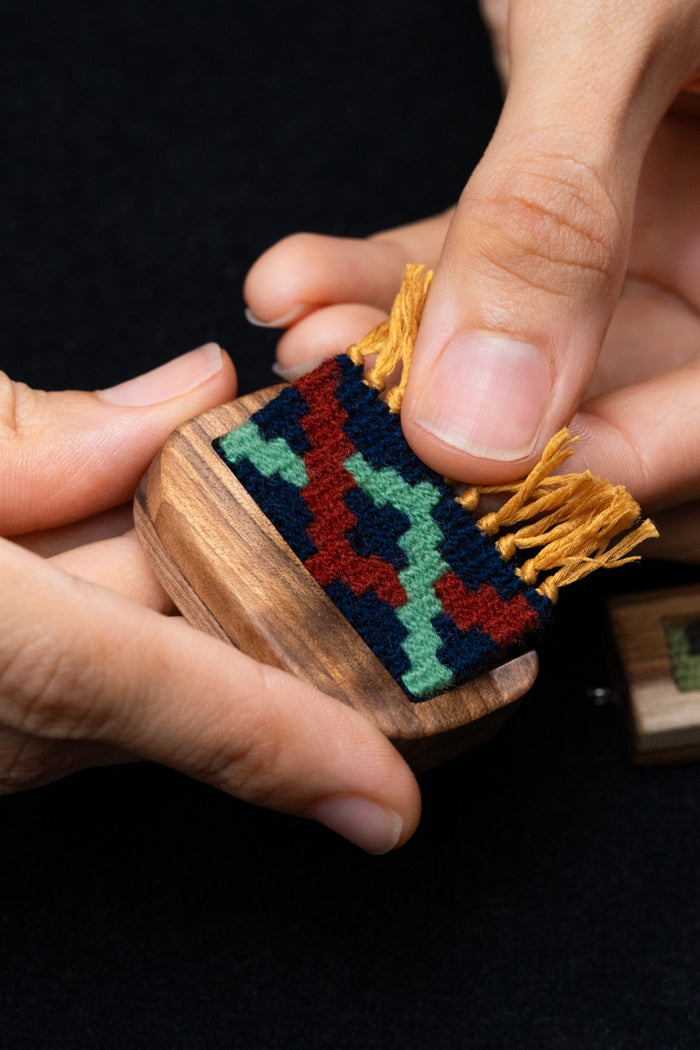
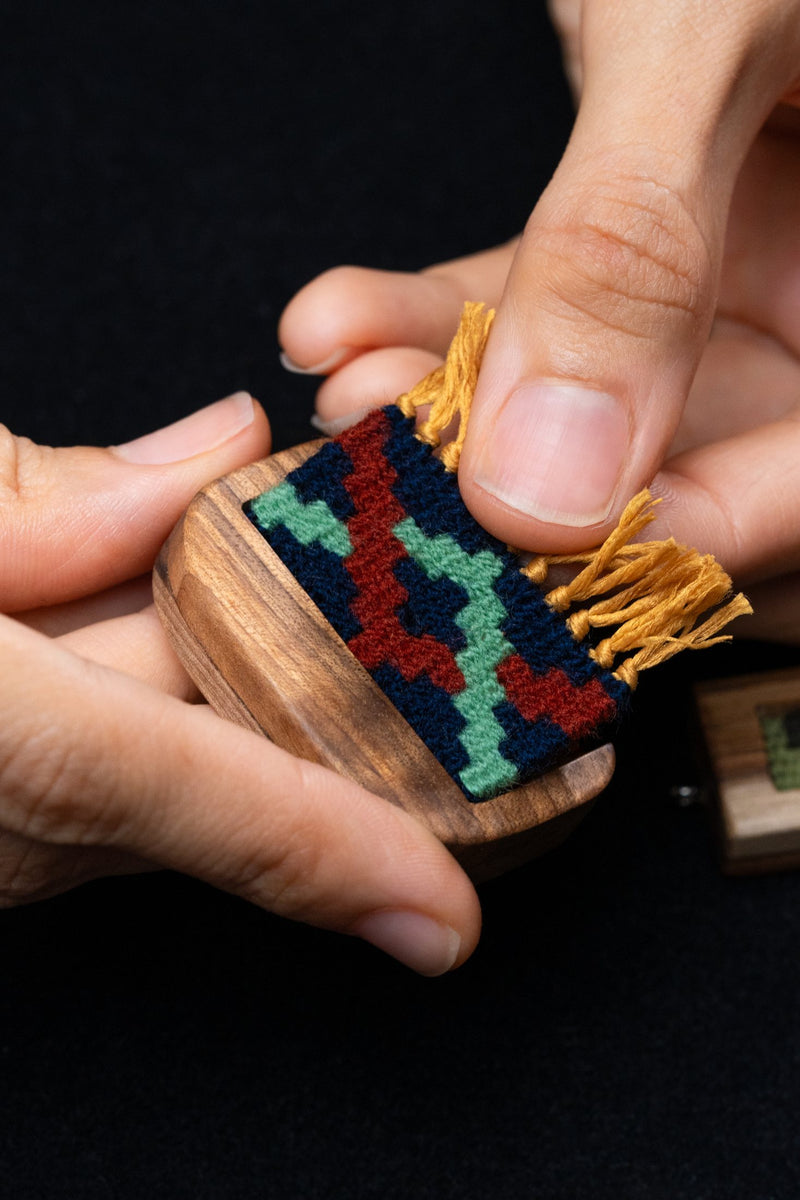
The woven strip is fitted into its walnut frame, set in place and pressed down until textile and wood stop being two things. This is the quiet moment of the whole process, and the one that decides how the piece will sit against you for years.

Chapter VI · The finish

The details nobody notices, until they do.

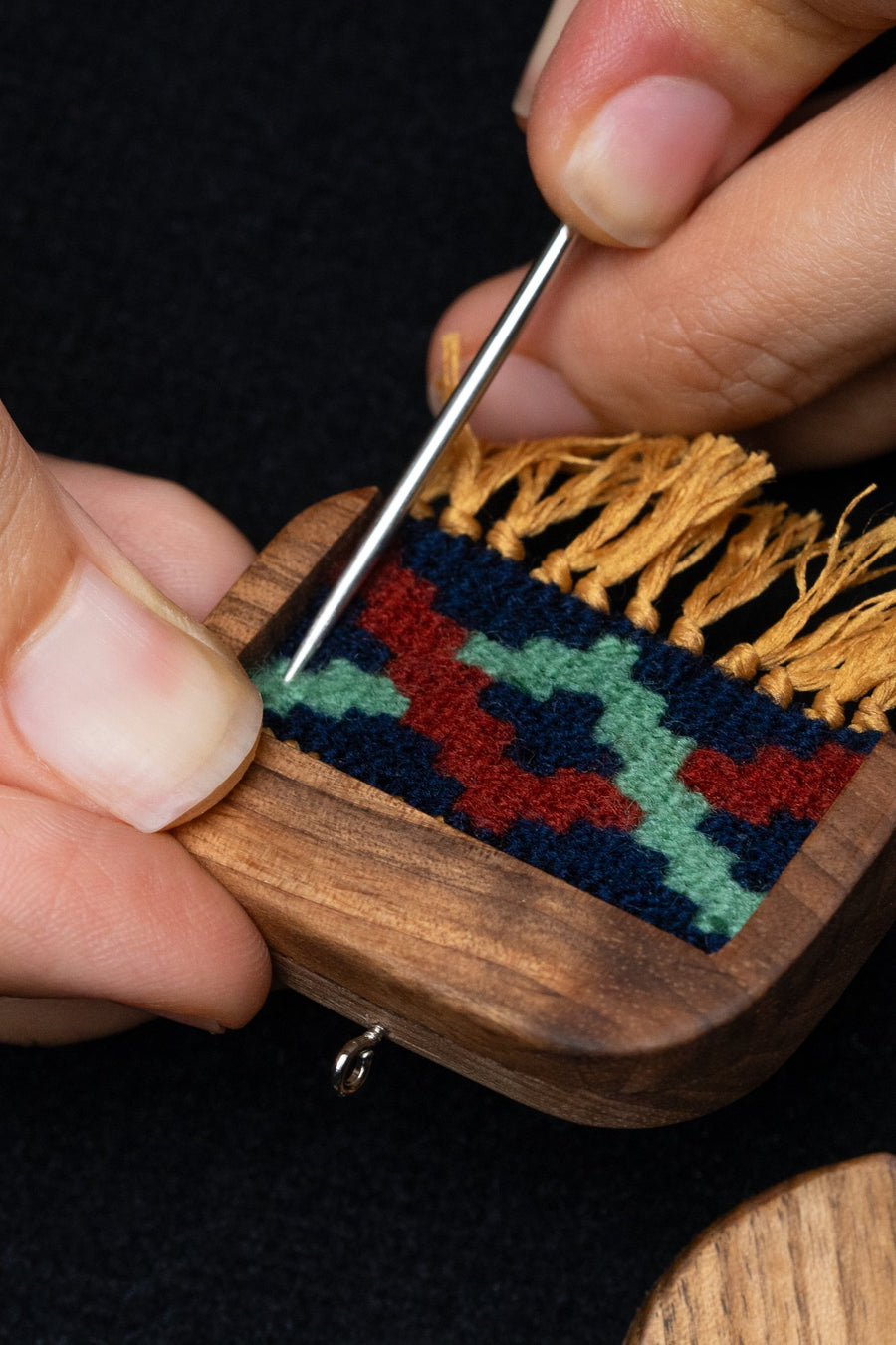
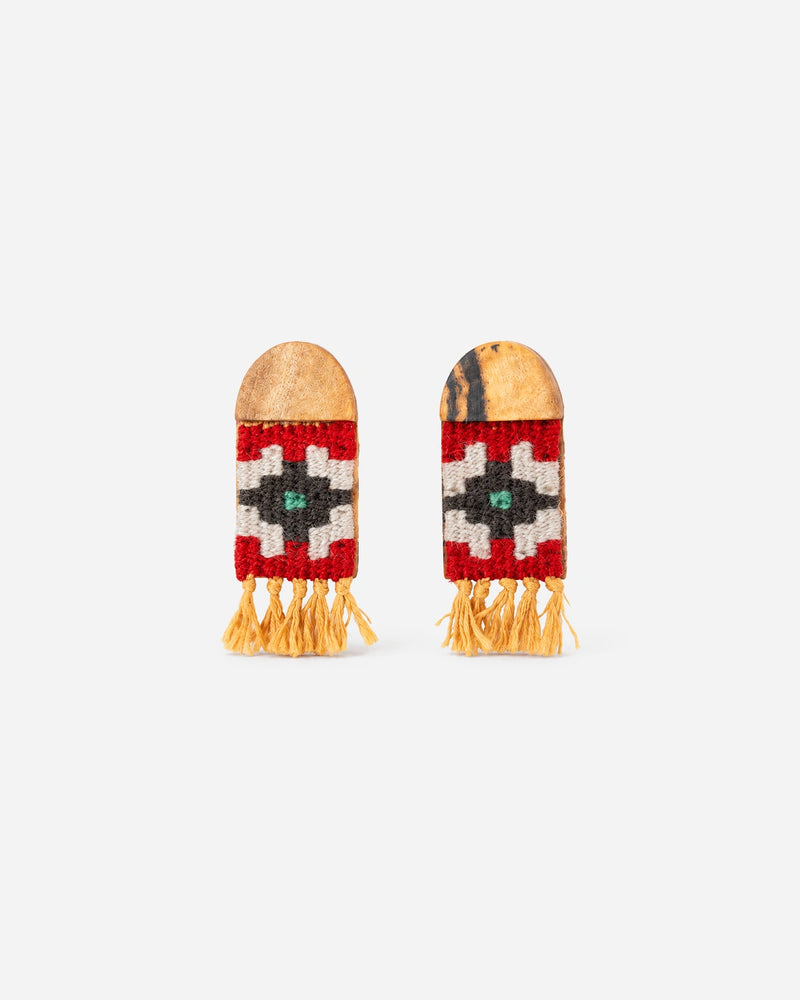
Trimming and combing the fringe of a finished kilim earringA finished kilim and walnut earring with its fringe, held in the hand

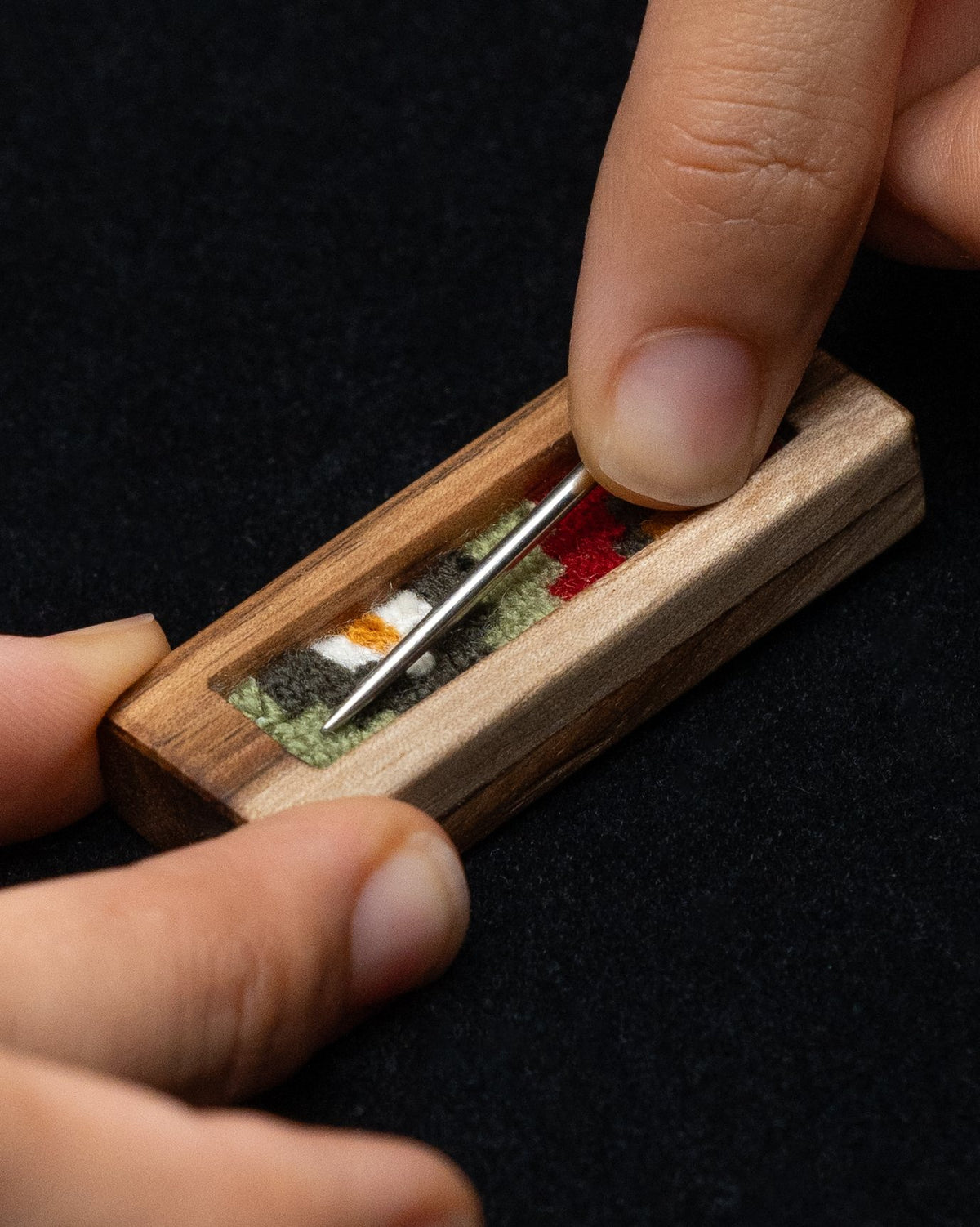
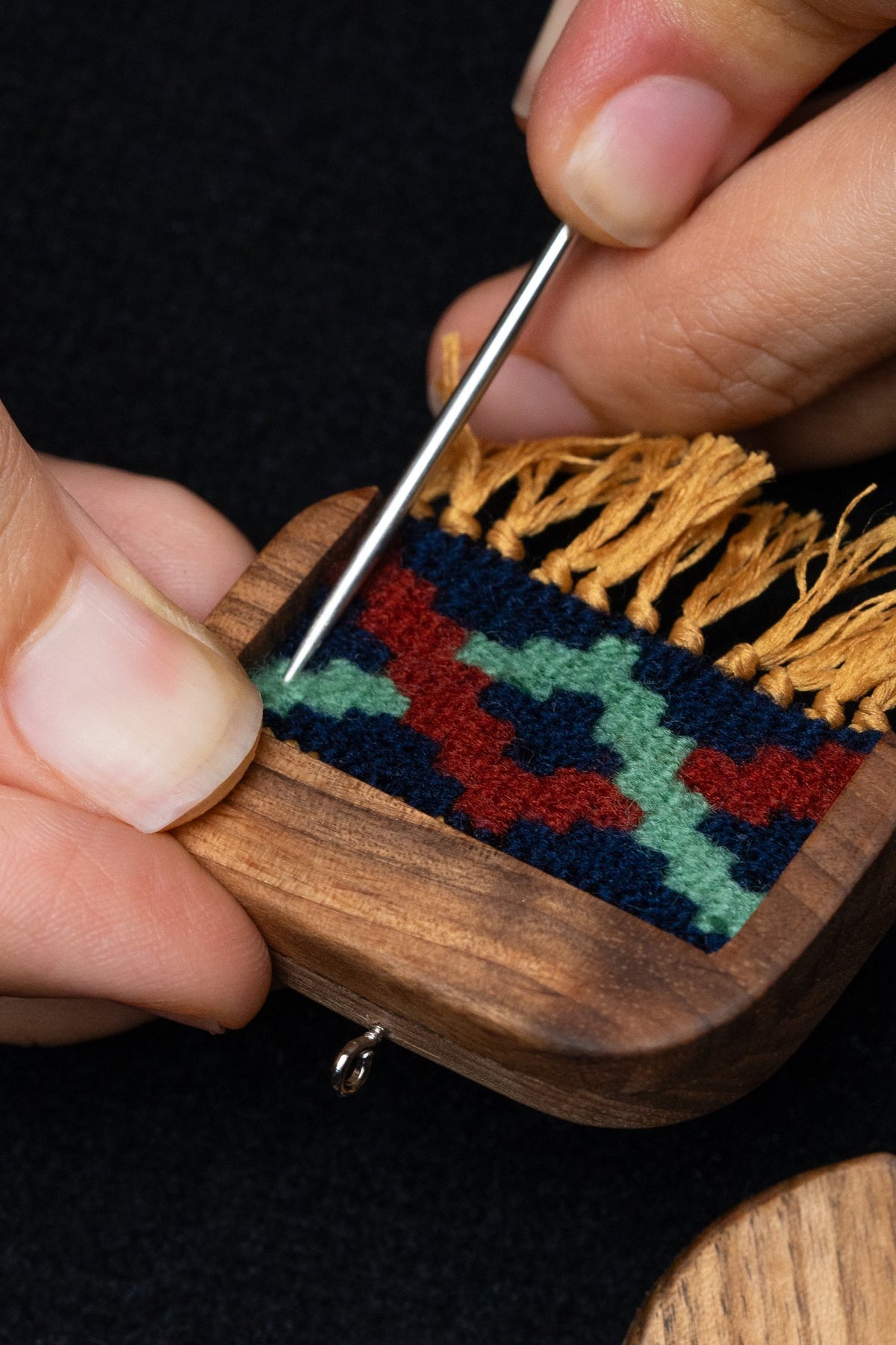
The fringe is combed out and trimmed. Loose ends are tucked away with a needle. The piece is turned in the light one last time.

Because each one is woven by hand, no two come out exactly alike. A row sits a fraction higher; a colour meets its neighbour a little differently. That small difference is the signature.

No two rows are pressed down with exactly the same hand. That is the point.

A finished kilim and walnut earring with its fringe, held in the hand
In your hands

It started as a line. Now it's yours.

Somewhere down the line, you will wear it on an ordinary Tuesday, with a white shirt or a black jumper, and someone will lean in and ask where it came from.

Now you know the story. Tell it however you like.

Explore Kilim & Walnut

Woven in this story

Find your colourway

Earrings, necklaces, bracelets and sets, depending on the design.

See the whole Kilim & Walnut collection