
Black Friday
25% off every handcrafted piece
Traditional crafts, made by hand and turned into jewellery. For five days only, every piece is 25% off.
Prices shown already include the discount. Ends Friday 27 November, midnight UK time.

Your shopping bag is empty
Go to the shop
Traditional art from Balochistan
Balochi Embroidery
A tradition passed from hand to hand.
It begins with a needle and a counted thread. Balochi embroidery, suzandoozi in Persian, has been passed from generation to generation in Balochistan, taught hand to hand rather than written down. It is still stitched by hand there today, one counted stitch at a time. We set a small piece of that living tradition into jewellery you can wear.

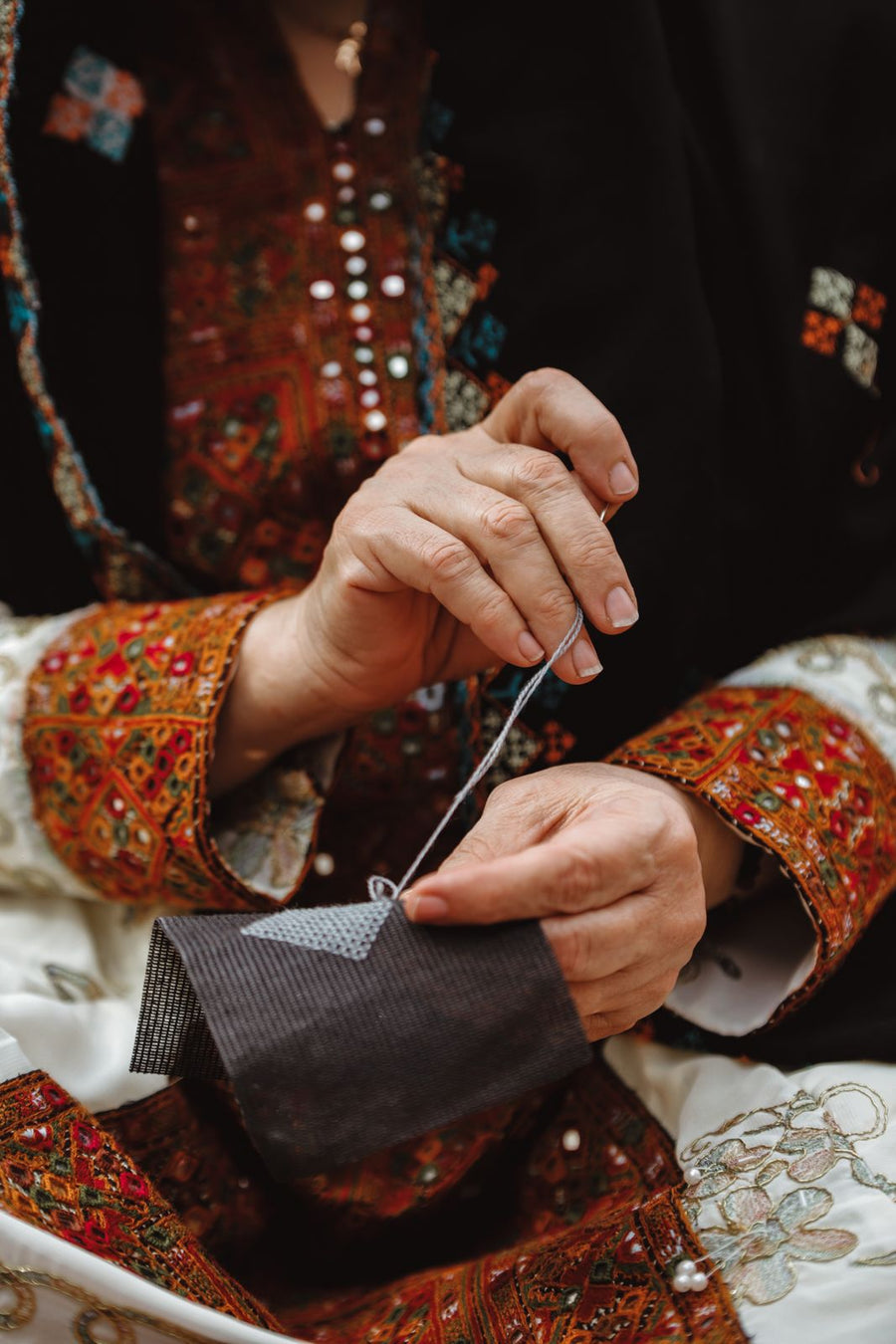

The stitching, and the finished piece.
From thread to jewellery
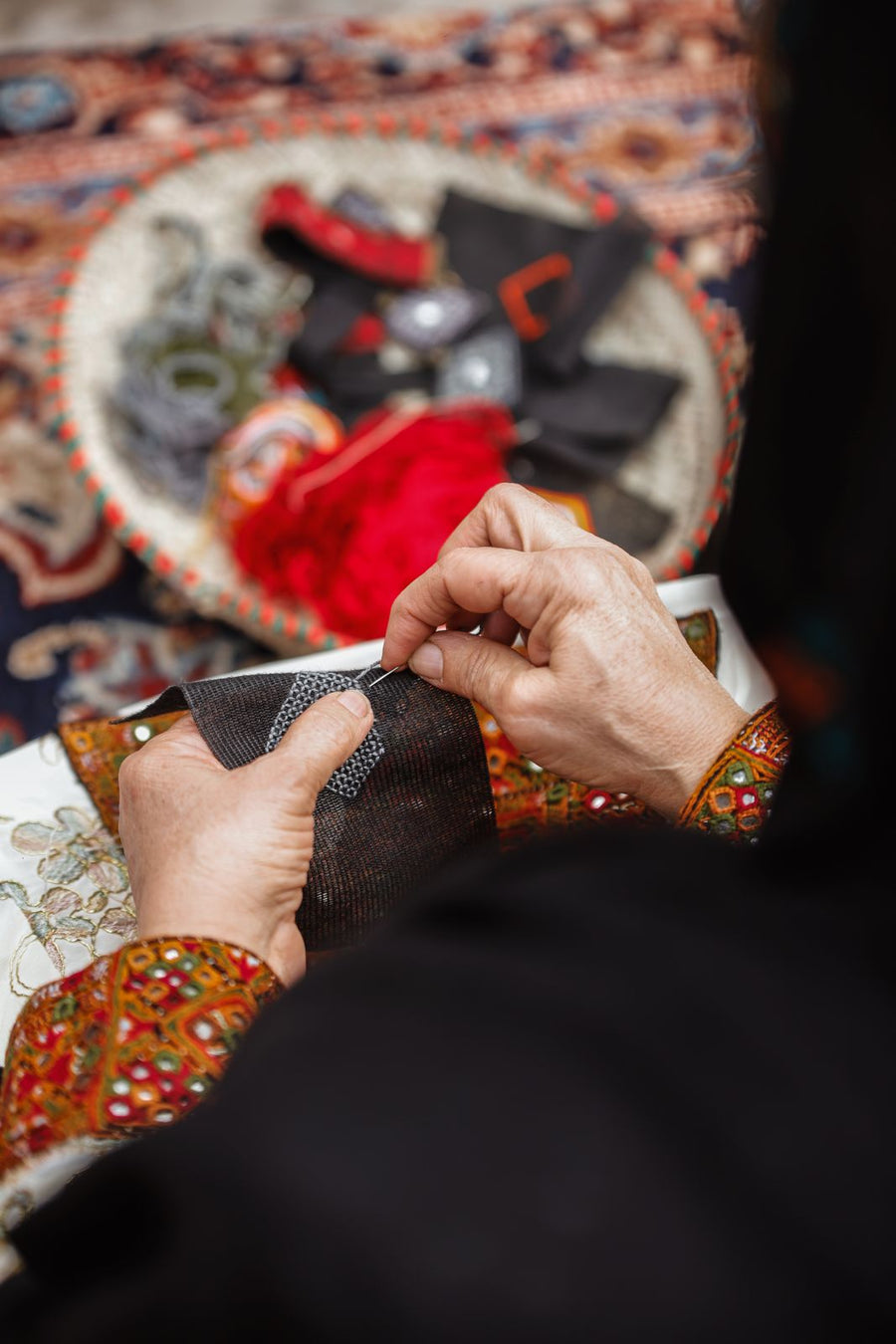
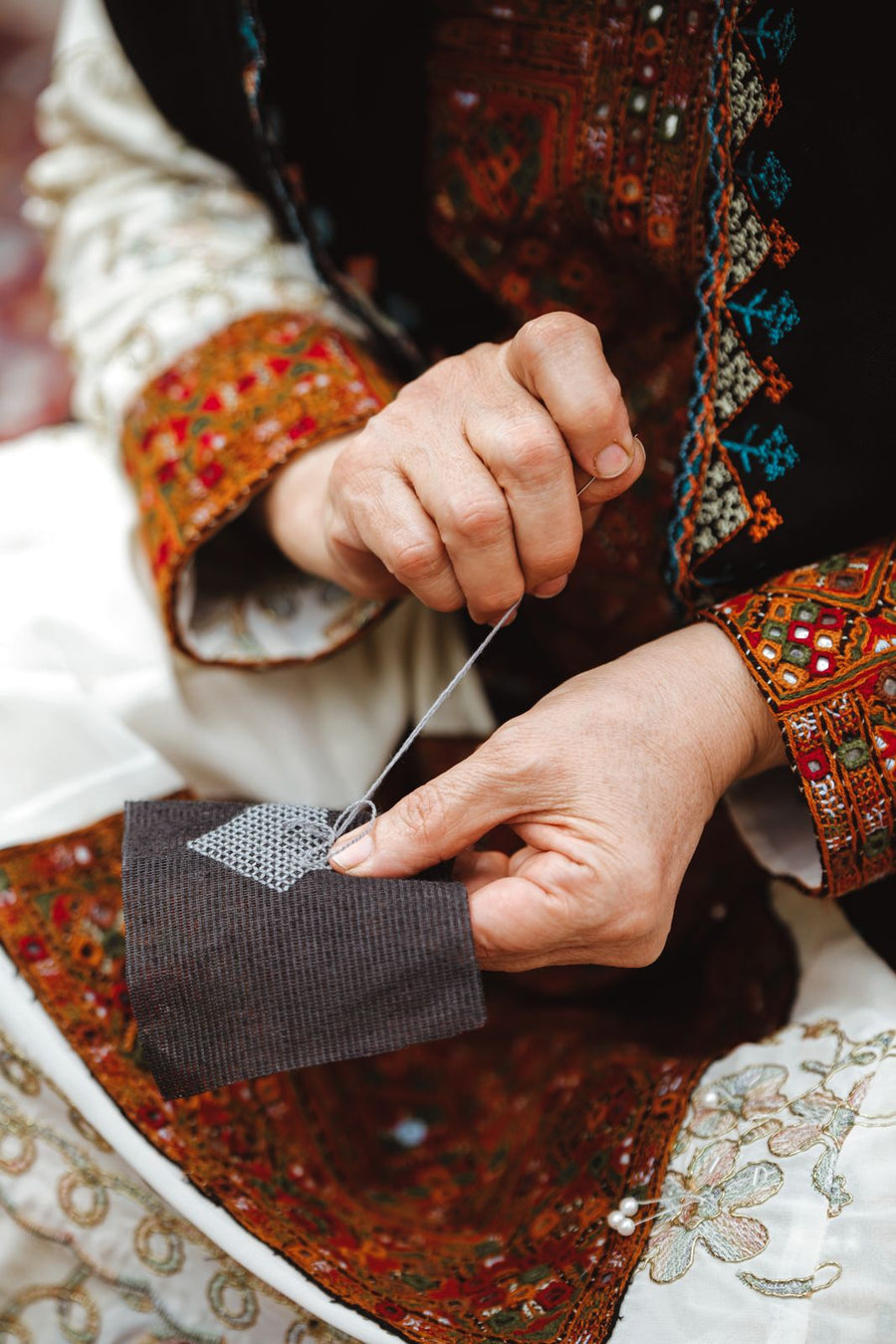
Every piece starts as hand embroidery on cloth before it becomes something to wear.
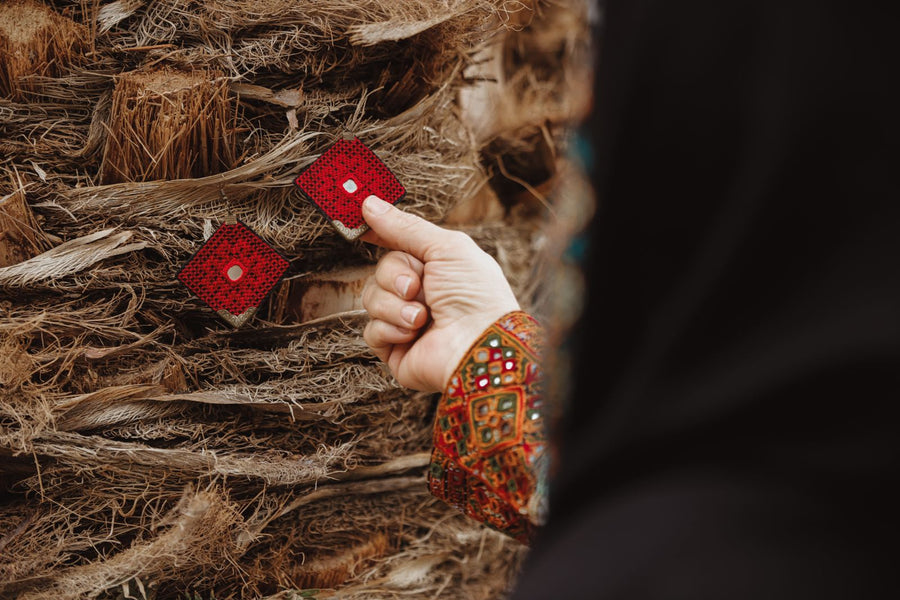


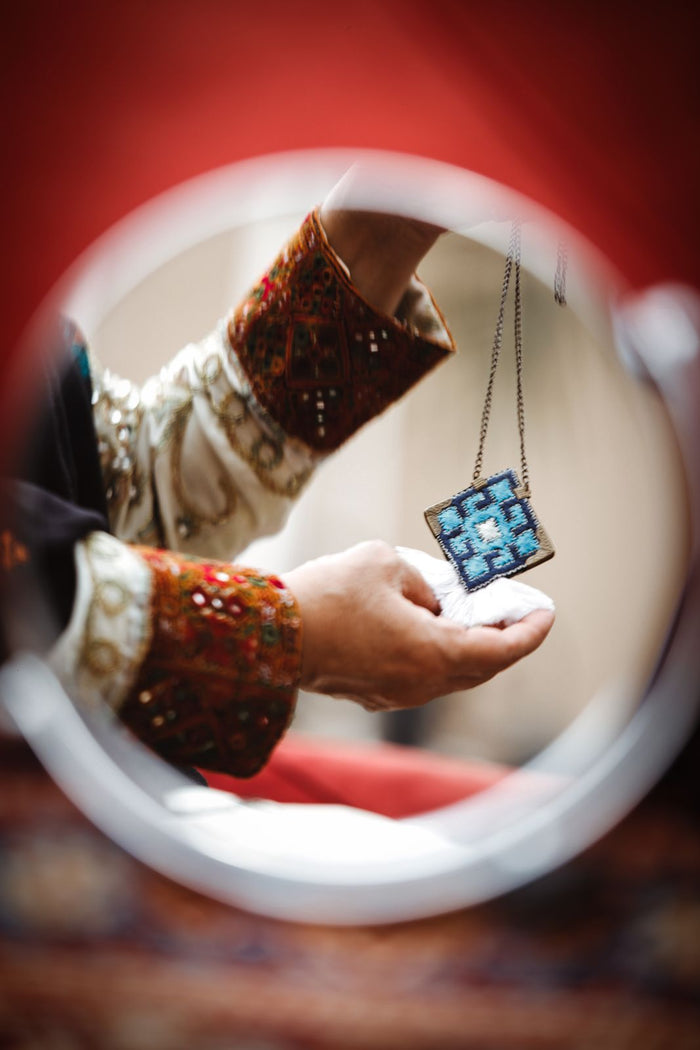
Mirror work
Small mirrors, stitched into Balochi dress to catch the light. Here they catch it close to you.
What is mirror work?


Craft story · Balochi Embroidery
A needle, a thread, and hands that remember.
In Balochistan, suzandoozi is often learned sitting beside someone, stitch by stitch. Follow one piece from bare cloth to a small mirror of light you can wear.
- Before the first stitch, there is counting.
- One colour, then the next.
- A small piece of light, sewn in.
- Turned on its point, made to be worn.
Good to know
Balochi embroidery: your questions answered
What the art is, where it comes from and how it becomes the jewellery you wear.
What is Balochi embroidery?
Balochi embroidery is the traditional hand embroidery of the Baloch people of Balochistan. In Persian it is called suzandoozi, which means needlework. Its patterns are built from tiny counted stitches in strong colours, and it is traditionally worked into the cuffs, front panels and pockets of women's dresses.
Where does Balochi embroidery come from?
It comes from Balochistan, the homeland of the Baloch people. The craft has been passed down from generation to generation, taught hand to hand rather than written down, and it is still stitched there today.
How is Balochi embroidery jewellery made?
Each piece starts as a small panel of embroidery, stitched by hand by counting the threads of the cloth one by one. Some designs have tiny mirrors stitched into place. The finished embroidery is then framed and made into earrings, necklaces and bracelets.
Is every piece handmade?
Yes. The embroidery in every piece is stitched by hand, so small differences in the stitches make each one slightly different from the next.
What is mirror work in Balochi embroidery?
Mirror work means small pieces of mirror held onto the cloth with a ring of stitches. It is a familiar feature of Balochi dress, and you can see it in our Crimson Weave and Gray Weave mirror pieces.
How do I care for embroidered jewellery?
Keep it dry and away from perfume, lotions and strong sunlight, and store it flat in its box. If it gathers dust, brush it gently with a soft, dry brush.

